New York, 25/06/2015 (SPS).-
 The examination of the
question of Western Sahara in the UN Decolonization Committee was
characterized by numerous interventions defending international legality
in Western Sahara, a conflict that almost 40 years.
Swift action must be taken to end the “dangerous status quo” in Western
Sahara and to finally grant independence to the “last African colony”,
the Special Committee of 24 heard today, as it approved five draft
resolutions on a range of items on its agenda.
“This is the last African colony to be decolonized,” Ahmed Boukhari,
a representative of the Frente Polisario, told the Special Committee —
known formally as the Special Committee on the Situation with regard to
the Implementation of the Declaration on the Granting of Independence to
Colonial Countries and Peoples. He implored the Committee to “awaken
from its long sleep”.
In the face of the people’s decades-long wait for the right to
self-determination, the United Nations annual renewal of Mission for the
Referendum in Western Sahara (MINURSO) was “financing the extension of a
stalemate”, he said, urging action to conduct the plebiscite, which had
been on hold since 1992.
Delegates shared their views and concerns, with speakers calling on
Morocco to extend all efforts to move the process forward. Colonialism
was illegal, some pointed out, insisting that the question of Western
Sahara must be resolved as quickly as possible in order to uphold the
people’s right to self-determination. Algeria’s representative
emphasized that “it is high time to give peace a chance”.
Taking up a report on the “Question of Western Sahara”
(document A/AC.109/2015/2), the Committee began a discussion on the
issue.
JAIME HERMIDA CASTILLO (Nicaragua) said in the Third Decade aimed at
eradicating colonialism the international community had repeatedly
called for the right of the Saharan people to self-determination and
independence. That aim had yet to be fulfilled and action must be
taken. The African Union had made efforts to ensure progress in that
area and he hoped the process would advance towards that goal.
RAFAEL DARÍO RAMÍREZ CARREÑO (Venezuela) said his delegation hoped
the negotiating process begun by the United Nations would be renewed.
The process would be successful if Morocco ended its delaying tactics,
as those obstacles had continued the occupation of its territory. Human
rights groups had reported violations, he said, adding that thousands
of refugees had suffered from hunger, displacement and separation from
their families. Expressing support for the people, he hoped the process
would resolve outstanding issues.
OSCAR LEÓN GONZÁLEZ (Cuba) said his country supported the right of the
people of Western Sahara to self-determination, based on international
law. The African Union’s Peace and Security Council decision focused on
close cooperation between the African Union and the United Nations, he
noted, adding that Cuba contributed to efforts aimed at helping the
people, including through education programmes.
LUIS MAURICIO ARANCIBIA FERNÁNDEZ (Bolivia) said the conflict in
Western Sahara was a decolonization issue, and noted that the most
recent round of talks had not led to any results. He hoped that a
solution compatible with the United Nations Charter would be found in
the near future. He reaffirmed the right of the people of Western
Sahara to self-determination, and supported all efforts of the United
Nations to those ends.
VANDI CHIDI MINAH (Sierra Leone) said that the question of Western
Sahara was one of the most difficult in Africa. The two sides, Morocco
and the people of Western Sahara, were determined to resolve the issue
through negotiations. The African Union was also seized of the matter,
and efforts were under way to push the parties to negotiate and reach a
settlement that was sustainable and acceptable to all parties. His
country would continue to support those efforts, including by asking the
Security Council to be more proactive in finding a solution. The
Special Committee should support all efforts geared towards that end.
AGUSTÍN FORNEL (Ecuador) rejected the fact that in the twenty-first
century, colonialism — which impeded peace and development — still
existed. The Third International Decade should put an end, once and for
all, to the need for such work. In that respect, he urged the full
cooperation of all colonial Powers with the work of the Special
Committee. On Western Sahara, which had claimed its people’s
inalienable right to self-determination, he said that it was solely up
to the Saharan people to express their desires. The question of Western
Sahara was clearly an issue of decolonization. Colonialism in all of
its manifestations was a denial of fundamental human rights, he said,
urging the parties involved to continue to seek an agreement on the
question of Western Sahara.
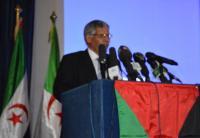
Taking the floor, AHMED BOUKHARI, representative of the Frente
Polisario, said that Western Sahara had been a Spanish colony that was
invaded by Morocco in 1975. “It is an affront for Africa to have this
persistent colonial case,” he said, adding that Frente Polisario had
repeatedly appealed to the Special Committee to take action. “This is
the last African colony to be decolonized,” he said, adding, “we are
facing a dangerous status quo.”
Twenty-three years had passed, he said, since a referendum on the
status of Western Sahara had been blocked by Morocco. That country held
a position of “intransigence”, which was the reason why the
decolonization process had not progressed. Indeed, Moroccan obstruction
— with the “unconcealed support” of France — was enabled by the United
Nations, whose annual renewal of the Mission for the Referendum in
Western Sahara (MINURSO) was “financing the extension of a stalemate”.
In addition, the illegal exploitation of the natural resources of the
Saharan people had been ongoing for more than 40 years. Morocco refused
to receive the Secretary-General’s Special Envoy and sought to prolong
the process in the hope that the issue would be forgotten.
The recent Summit of the African Union had adopted a text appealing
to the General Assembly to set a date for the resolution of the question
of Western Sahara. The Saharan people were frustrated at United
Nations inaction, he said, urging the Special Committee to show that the
Organization was active on the matter. He also asked it to visit the
Territory of Western Sahara, which he said would be welcomed by Member
States in good faith. “This Committee must awaken from its long sleep,”
he said, adding that “the Saharawi people invite you and await you”.
EPHRAIM LESHALA MMINELE (South Africa) said that his delegation
believed in the legitimate right of people living under colonialism to
exercise their right to self-determination. To not recognize the
Saharawi Republic would be to be complicit in denying the Saharawi
people those rights, he said. The continuous colonial occupation of
Western Sahara by Morocco constituted a threat to the credibility of the
Special Committee. It was regrettable that, following four decades of
efforts, no proposal had been able to break the impasse between the two
parties. The Africa Union Special Envoy for Western Sahara had taken
various relevant actions, such as establishing a Contact Group on
Western Sahara in order to ensure sustained high-level attention to the
issue. In addition, the African Union Peace and Security Council had
proposed a global boycott of products made with resources exploited from
Western Sahara. Finally, he called on the Special Committee to
undertake a visit to that Territory.
SABRI BOUKADOUM (Algeria) said with regard to the “last colony in
Africa”, the conflict was a decolonization issue. The United Nations
must ensure the implementation of the principle of self-determination
pursuant to its Charter. Calling for the immediate resolution of the
issue, he said that his delegation was deeply frustrated and concerned
at the absence of progress. General Assembly and Security Council
resolutions and the International Court of Justice opinion called for
action, he said, adding, “it is high time to give peace a chance”. He
urged the organization, without delay, of a referendum on
self-determination.
Turning to human rights, he said it was the duty of the
international community to monitor the situation. As for the
exploitation of natural resources, he said exploration activities were
in violation of international law with regard to Non-Self-Governing
Territories. All Security Council resolutions had reaffirmed the body’s
commitment to the right to self-determination of the people of Western
Sahara, while calling on Morocco to immediately withdraw. The African
Union had also taken a strong stand on the situation, and he hoped that
reason would prevail in settling the issues. Algeria would never forego
its stand on self-determination, he concluded.
Taking the floor for a second time, Mr. BOUKADOUM (Algeria) said
that his country was an official observer of the peace process. He
invited the Committee to visit the region to hear directly from the
people in Tindouf and Western Sahara.
Source : United Nations


 New York, August 20, 2015 (SPS) -The United Nations
Secretary General, Ban Ki-moon, has called for an early settlement to
the question of Western Sahara given the volatility in the region, the
proximity of extremist and terrorist groups, increasing frustration of
the young people and of tens of thousands of refugees losing faith in
the political solution.
New York, August 20, 2015 (SPS) -The United Nations
Secretary General, Ban Ki-moon, has called for an early settlement to
the question of Western Sahara given the volatility in the region, the
proximity of extremist and terrorist groups, increasing frustration of
the young people and of tens of thousands of refugees losing faith in
the political solution.